
How to Read a Cannabis Certificate of Analysis
A cannabis certificate of analysis, or COA, is a laboratory report about a tested sample. Start by matching the package’s lot or batch identifier to the report. Then check the sample name, report status and date. Those checks help you determine whether the results belong to the package you’re looking at.
Find the package identifier
Look for a field labeled lot, batch, or unique identifier on the package. Copy the full identifier, including letters, hyphens, and leading zeros. It can help to take a photo of the label while you have the package in front of you.
A report may have several identifiers. The laboratory’s sample ID identifies the item it tested. A lot identifier ties that item to the production lot. The New York Office of Cannabis Management’s sample report displays both fields, so it’s a useful example of why comparing the right pair matters. New York’s sample report
The product name and format are useful cross-checks. Two packages can share a product name and still belong to different lots. If the report lists an edible sample and the package is flower, pause and ask for clarification even if the brand name matches.
Match the package to the report
A QR code can take you directly to a report or to a menu of reports. In either case, open the document and compare the actual identifiers. A link from the package can help you find the report. The fields inside it tell you what the laboratory tested.
| Field | Fictional package | Fictional report | What to check |
|---|---|---|---|
| Product name | Example Flower | Example Flower | Confirm both refer to the same product. |
| Lot identifier | DEMO-042 | DEMO-042 | Match the full identifier. |
| Sample format | Dried flower | Dried flower | Confirm the report describes the same form. |
| Report status | — | Final | Look for a completed report. |
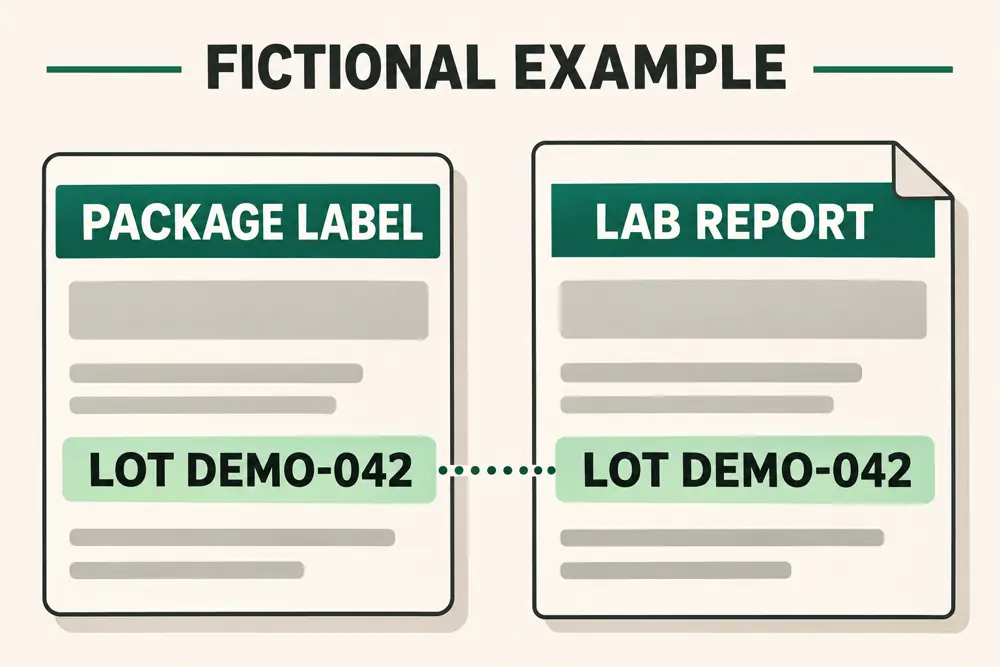
If the report instead says DEMO-024, you have a mismatch. Set that report aside and ask for the one associated with DEMO-042. A similar name, matching packaging, or a recent report date cannot resolve the difference. If the package and report use different kinds of identifiers, ask the retailer or responsible company which field connects them.
Read the dates and status
Labs may list when a sample was collected, when it arrived, and when the report was issued. These dates describe different events. Use the reported or issued date when you want to know when the lab released the report. Check the status if the document has one. A pending or preliminary report can still change.
A recent date is a useful clue only after you match the lot. If you find multiple reports for the same identifier, ask which one is the final applicable version. Look for the laboratory name and contact details if you need clarification about a field or whether a report is complete. Illinois COA guide
Compare results with their units
Read the unit beside each result. A percentage, a concentration such as milligrams per gram, and an amount per package answer different questions. Compare values only after you understand what each number measures. If the label and report use different units or describe different quantities, ask for clarification before treating the numbers as equivalent.
Pay attention to the scope of any pass or fail result. It applies to the sample, tests, and regulatory limits described in the report. Testing requirements can vary by jurisdiction and product type. Use the rules or guidance for the jurisdiction where the product was tested when you need to understand a particular result. Illinois COA guide
What to do if the report is missing
If the QR code leads to a generic page, or if the report is missing or unreadable, give the retailer or responsible company the product name, package size, and exact lot identifier. Ask for the final report that matches that package. If a field remains unclear, use the relevant regulator’s consumer resources to find out which identifiers to look for.
Keep this order in mind whenever you open a report. Match the lot, cross-check the sample, confirm the report is final, and then read the results and units. For help recognizing label terms on extracts, see the Buds n Cart Concentrates guide.